The exploitation of marginalized groups for the benefit of more privileged societies is a recurring theme in the annals of history. This pattern is vividly illustrated in the context of France’s post-colonial engagements and domestic policies, particularly concerning the utilization of human resources from Africa. From the deployment of tirailleurs (colonial infantry) as cannon fodder during wars to the reliance on immigrant labor for post-World War II reconstruction, France’s historical dependency on external human resources for national development and crisis management has been marked. The latest chapter in this narrative, under President Emmanuel Macron’s administration, involves the controversial strategy of recruiting African doctors to address France’s chronic shortage of medical professionals—a shortage exacerbated by decades of restrictive educational policies, notably the numerus clausus in medical studies.
The numerus clausus, a cap on the number of students allowed to progress to their second year of medical studies, was implemented in France in the 1970s. Intended to maintain a high standard of medical training and manage the capacity of training facilities, this policy inadvertently led to a long-term shortage of healthcare professionals. As the baby boomer generation approaches retirement, France finds itself in an acute healthcare crisis, with not enough medical professionals to replace the retiring ones, let alone meet the increasing demands of an aging population.
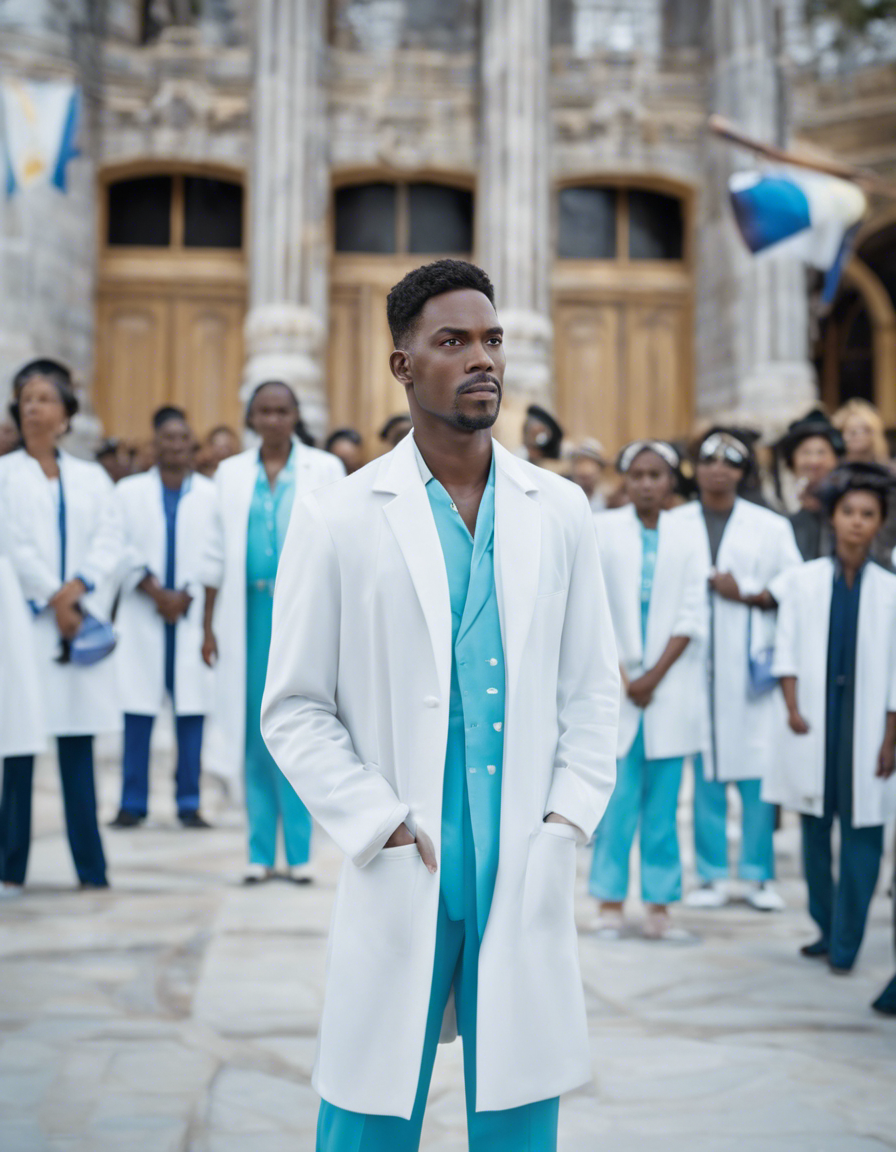
In an attempt to mitigate this crisis, the French government has looked beyond its borders, specifically towards African countries, to recruit doctors. This strategy, while providing a short-term solution to France’s healthcare woes, raises significant ethical and practical concerns. It highlights a continuation of France’s colonial legacy of extracting resources—this time human, rather than material—from African countries.
The ethical implications of such a recruitment strategy are profound. First, it perpetuates a cycle of dependency and exploitation, wherein wealthy nations benefit at the expense of the development prospects of poorer countries. African nations, with their own challenges in healthcare provision, are left even more vulnerable as their limited pool of medical professionals is enticed away by the promise of better wages and working conditions in France. This ‘brain drain’ phenomenon exacerbates the healthcare crises in these countries, undermining their efforts to improve public health outcomes and achieve sustainable development.
Moreover, the recruitment of African doctors by France can be seen as a Band-Aid solution that fails to address the root causes of the French healthcare system’s shortcomings. Rather than investing in the long-term solution of reforming medical education and healthcare policy to produce and retain more domestic healthcare professionals, France is opting for a quick fix that may have detrimental effects on global health equity.
The situation calls for a reevaluation of global healthcare workforce policies, emphasizing ethical recruitment practices that do not disadvantage already under-resourced countries. International cooperation and agreements, such as the World Health Organization’s Global Code of Practice on the International Recruitment of Health Personnel, offer frameworks for responsible, sustainable workforce strategies that respect the rights and needs of both source and destination countries.
In conclusion, while France’s attempt to address its healthcare professional shortage by recruiting doctors from African countries may offer temporary relief, it is a contentious strategy that perpetuates historical patterns of exploitation and inequality. It underscores the need for comprehensive healthcare reform within France that addresses the root causes of its medical professional shortage, as well as a commitment to ethical international recruitment practices that do not undermine the healthcare systems of less wealthy nations. Only through such holistic and ethical approaches can sustainable solutions to global healthcare workforce challenges be achieved.

 EX_DJIBOUTI SEMPER ALIQUID NOVI
Vous devez être connecté pour poster un commentaire.