
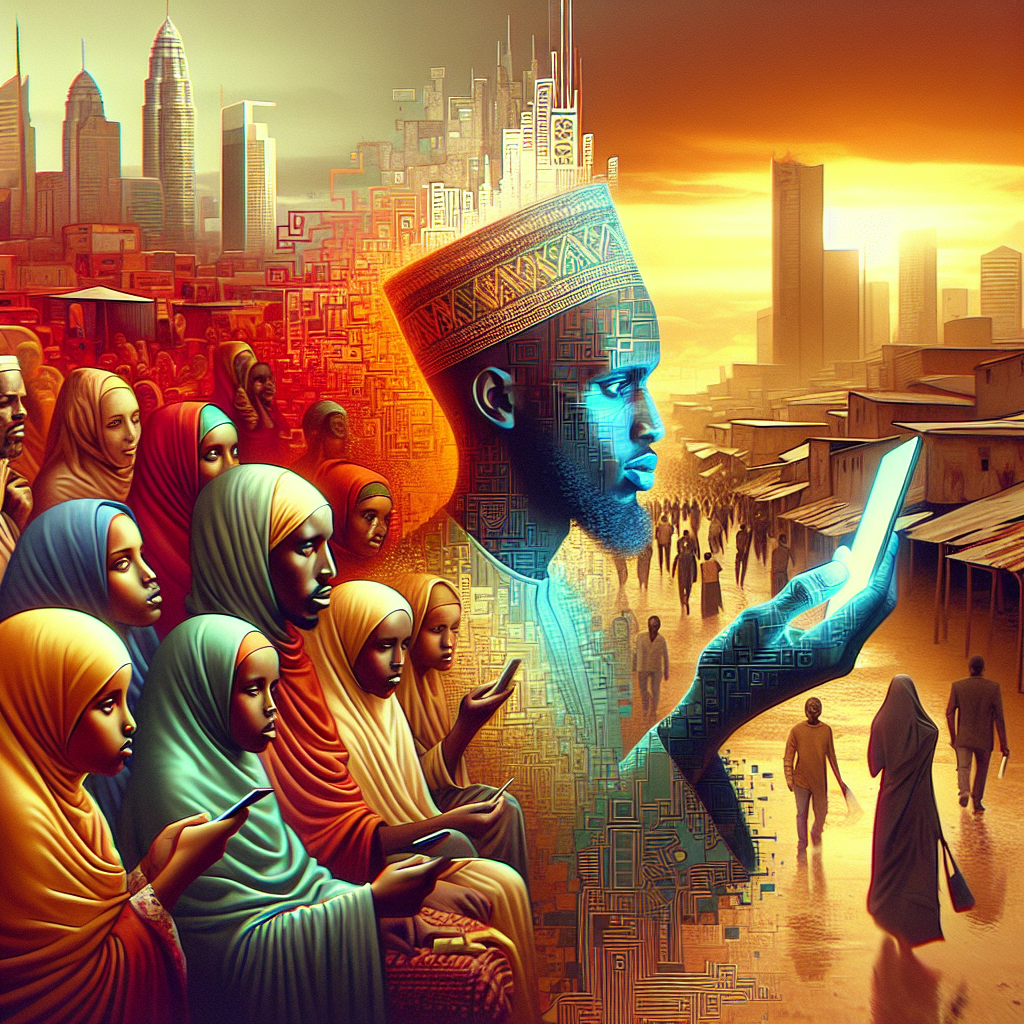
Introduction
At the start of the 21st century, we are witnessing a worrying proliferation of a new type of religious figure: “YouTube Sheikhs”. Taking advantage of a Somali society torn apart by poverty, corruption, and terrorism, these individuals set themselves up as self-proclaimed scholars. In reality, they are just common charlatans, exploiting the credulity of their listeners to impose personal opinions under the guise of religious discourse and so-called scientific analyses. This pamphlet aims to reveal the dishonest maneuvers of these “YouTube Sheiks” and to highlight their blatant hypocrisy, particularly with regard to their community in Minnesota.
I. A Context Conducive for the Emergence of False Scholars
The current situation in Somalia is marked by political and social instability that has developed over decades. It is in this fertile ground that the “YouTube Sheikhs” find an audience ready to listen to them, often for lack of anything better. Extreme poverty, pervasive corruption and the constant threat of terrorism create an environment where critical voices and sophisticated analysis are rare. Local populations, in search of stability and meaning, then turn to these religious figures who claim to provide clear answers and simple solutions to complex problems.
1. The Spiritual and Educational Void
The collapse of traditional structures, aggravated by decades of conflict, has left a huge void that “YouTube Sheikhs” are rushing to fill. In a society where formal education is an unattainable luxury for most, these individuals find an audience willing to absorb their simplistic and often misguided messages.
– Lack of formal education: Education in Somalia is often limited, making populations vulnerable to manipulation. THE « Sheikh’s YouTubers » use this weakness to establish themselves as spiritual and intellectual authorities, despite their lack of academic training.
Education is a fundamental pillar of personal and collective development. In Somalia, incessant conflicts have destroyed educational infrastructure. Schools, when they exist, are often underfunded and lack essential resources. Teachers are rarely trained and school curricula are obsolete. In this context, access to quality education is a rare privilege, reserved for a minority elite. For the majority, formal education is either non-existent or insufficient to develop critical thinking and a deep understanding of contemporary issues.
This educational deficiency is exploited by « YouTube Sheikhs”. In the absence of credible alternative voices, they present themselves as holders of the truth. Their discourse, often simplistic and Manichean, resonates with a desperate population seeking clear answers to complex problems. Their lack of academic training goes unnoticed or is even seen as a sign of authenticity and closeness to ordinary people.
– Lack of stable benchmarks: Social disorganization causes people to desperately seek guides, even if those guides are unqualified. THE « Cheikhs YouTubers » then appear as beacons of stability in an ocean of chaos.
Protracted conflicts have not only destroyed physical infrastructure but also social structures. Traditional institutions, once guarantors of stability and order, are weakened or completely delegitimized. Clan chiefs, elders, and other local authority figures who played a crucial role in social cohesion are often discredited, exiled, or killed. Successive governments, marked by corruption and inefficiency, have failed to restore order and confidence.
In this context, people are desperately looking for guidance. The YouTube Sheikhs”, with their assertive speeches and supposedly simple solutions, present themselves as alternatives to traditional authorities. They offer a form of emotional and spiritual stability, even if their words lack solid foundations. For individuals searching for meaning and direction, these figures can appear like beacons in an ocean of chaos.
2. The Influence of Terrorism and Corruption
Endemic terrorism and widespread corruption exacerbate social and economic disorganization, creating an environment conducive to the emergence of opportunistic figures.
– Corruption of leaders: Corrupt authorities fail to provide basic services, leaving people at the mercy of those who promise even superficial solutions.
Corruption in Somalia is pervasive. Political leaders, often more concerned with personal enrichment than the well-being of their fellow citizens, misappropriate public funds and international aid. Basic services, such as health, education, and security, are seriously underfunded. Infrastructure is in ruins, and public institutions are dysfunctional. In this context, populations have little choice but to seek alternatives to meet their basic needs.
The YouTube Sheikhs” exploit this situation. They present themselves as alternatives to corrupt authorities, promising to guide people on the right path. Their discourse, often moralistic, severely criticizes the corruption of the elites while positioning themselves as defenders of the oppressed. In reality, their influence is based on the same dynamics of power and manipulation as those they denounce.
– Constant terrorist threat: Terrorist groups exploit poverty and despair, while « YouTube Sheikhs” claim to offer a moral and spiritual alternative, often in subtle alignment with these same groups.
Terrorism is a constant threat in Somalia. Groups like Al-Shabaab exploit poverty and desperation to recruit new members. They promise meaning, community, and livelihood to those who join them. Their propaganda is cleverly designed to attract idle young people and desperate families.
The YouTube Sheikhs” play an ambiguous role in this context. Although they are not always directly affiliated with terrorist groups, their speeches can often resonate with the messages of these groups. By advocating strict and often radical interpretations of religion, they create a climate of thought that can be exploited by extremists. They offer a moral and spiritual alternative which, although supposedly peaceful, is not exempt from a certain radicalism.
II. The “Youtuber Sheikhs”: Modern Charlatans
1. Amateurism and Lack of Rigor
Under the cover of religion and pseudo-science, Somali “Youtuber Sheikhs” engage in questionable and often dishonest practices. Their lack of academic training and lack of intellectual rigor results in disjointed and manipulative speeches.
– Speech without structure: These individuals do not present a clear plan of their so-called conferences. They jump from one topic to another without a common thread, making their interventions confusing and incoherent.
The YouTube Sheikhs” are distinguished by their lack of method and rigor. Their speeches are often amalgams of personal opinions, out-of-context quotes and hasty generalizations. They do not take the time to structure their interventions or develop coherent arguments. This lack of structure makes their speeches difficult to follow and creates an impression of confusion and disorder.
Their disjointed style may be intentional. By jumping from one topic to another without a common thread, they keep their audience in a state of confusion that prevents critical thinking. They quickly pass over controversial or fragile points, thus preventing in-depth analysis of their arguments. This tactic allows them to maintain an appearance of authority while avoiding difficult questions.
– Lack of rigorous methodology: Their so-called analyzes are devoid of any scientific rigor. They present personal opinions as absolute truths, without proof or verification.
The scientific method is based on rigor, verification and objectivity. The YouTube Sheikhs” ignore these fundamental principles. They present personal opinions and speculation as established facts. Their analyzes lack solid foundations, and they provide no evidence to support their claims. This lack of rigor is dangerous because it spreads erroneous information and myths which can have real and negative consequences on society.
Their claims are rarely verified or questioned by their audiences, who often lack the critical tools needed to discern fact from fiction. By presenting themselves as self-proclaimed experts, they exploit the credulity and good faith of their spectators. This usurpation of expertise is a form of intellectual fraud that must be denounced.
2. Manipulation of the Audience
By hiding their true intentions behind religious sermons, they skillfully manipulate their audience, often made up of people desperate and looking for answers.
– Emotional manipulation: They exploit the emotions of their audience, playing on fear, guilt and hope to establish their authority.
The YouTube Sheikhs” are masters of emotional manipulation. They use psychological persuasion techniques to influence their audience. They play on powerful emotions like fear, guilt, and hope to capture attention and convince. For example, they may exaggerate threats or dangers to create fear, or emphasize sins and faults to generate guilt. Then, they present themselves as the only ones capable of providing solutions or comfort, thus exploiting the hope of people seeking salvation or redemption.
This emotional manipulation is pernicious because it short-circuits rational reflection. Intense emotions can impair judgment and make individuals more likely to accept assertions without evidence. By exploiting these vulnerabilities, « Cheikhs Youtubeurs » manage to maintain a psychological hold on their audience.
– Lack of transparency : Their lack of transparency regarding their target demographic and message raises questions about their integrity. They do not clearly reveal their affiliations or their true intentions.
Transparency is an essential value in all honest and ethical communication. The YouTube Sheikhs” often lack transparency, both about their intentions and their affiliations. They do not always specify what kind of audience they are addressing, or why they choose certain topics over others. This opacity makes it difficult to understand their true motivations and raises questions about their integrity.
Additionally, they don’t always disclose their sources of information or references, making it difficult to verify their claims. This lack of transparency can hide personal or political agendas. For example, they may be funded or influenced by groups with specific goals, but not reveal these connections to their audience. This insidious manipulation undermines the trust and credibility of public discourse and must be vigorously denounced.
III. A Large-Scale Intellectual Scam
1. Usurpation of Science and Religion
The phenomenon of YouTube Sheikhs” is nothing more than an intellectual scam. They present themselves as scholars while spreading superficial and biased analyses.
– Scientific claims: They claim to transform personal opinions into scientific analyses, without any rigorous methodology. This usurpation of science is not only dishonest, but also dangerous.
Science relies on rigorous methods of data collection, analysis and verification. “YouTube Sheiks” usurp this scientific rigor by presenting personal opinions as scientific facts. They use pseudo-scientific language to give the appearance of credibility to their statements, without following the strict protocols necessary for true scientific analysis. This deception is dangerous because it spreads misinformation and can influence individuals’ decisions and beliefs in negative ways.
For example, they may make claims about health, politics, or economics without providing solid evidence. In the absence of rigorous methodology, their analyzes are superficial and biased, often relying on hasty generalizations and unsubstantiated extrapolations. This usurpation of science undermines public trust in genuine scientific experts and institutions, which can have serious consequences, particularly in terms of public health and social policy.
– Religious manipulation : Their religious pretensions often mask personal ambitions and political vendettas. Using religion as a cover, they exploit people’s faith for their own purposes.
Religion is a powerful force that can guide and inspire, but also manipulate and exploit. The « Sheikh’s Youtubers » use religion as a tool of manipulation, masking their personal ambitions and political vendettas under a veneer of piety. By presenting themselves as spiritual guides, they exploit the sincere faith of their listeners to establish their influence and power.
Their religious sermons are often intertwined with political messages and social critiques that serve their own interests. They may attack political rivals, promote specific agendas, or mobilize their listeners for personal causes. This exploitation of religion is a betrayal of the faith and trust of their listeners. It creates a climate of distrust and division, undermines the moral and ethical foundations of society, and diverts attention from the true spiritual and social needs of people.
2. Negative Impact on Society
By spreading erroneous and partisan narratives, they contribute to disinformation and the polarization of Somali society.
– Disinformation : Their simplistic and biased messages spread misinformation, contributing to confusion and division in society.
Disinformation is one of the major scourges of our time, and « YouTube Sheikhs”contribute greatly to this. Their messages are often simplistic, biased and based on unverified information. They spread myths, rumors and fake news that sow confusion and division. By repeating lies or half-truths, they erode individuals’ ability to discern truth from falsehood.
This misinformation has real and serious consequences. It can influence the behaviors and decisions of individuals in a negative way, lead to actions based on false premises, and create a climate of mistrust and suspicion. By spreading erroneous information, YouTube Sheikhs” undermine social cohesion and trust in institutions, aggravating tensions and conflicts within society.
– Social polarization: By fueling polarizing discourses, they exacerbate social and ethnic tensions, making any attempt at reconciliation and reconstruction more difficult.
“YouTube Sheiks” often play on social and ethnic divisions to strengthen their influence. Their polarizing discourses exacerbate existing tensions and create new fault lines. They pit groups against each other, stir up resentment and hatred, and fragment society into opposing camps.
This polarization is destructive. It makes reconciliation and reconstruction much more difficult, because it entrenches divisions and hostilities. Communities are less able to cooperate, dialogue and find common solutions to their problems. By exacerbating social and ethnic tensions, “YouTube Sheikhs” contribute to instability and violence, making it more difficult to build a peaceful and prosperous society.
IV. The Minnesota Paradox: Far from Local Reality
1. Geographic and Cultural Distance
A particularly troubling aspect of these “YouTube Cheicks” is their location. Many of them reside comfortably in the state of Minnesota, including the cities of Minneapolis and Saint Paul, while neglecting the pressing needs of their own local communities.
– Geographic disconnection : Although they live within a large Somali community in Minnesota, they choose to speak to geographically distant audiences, often in Somalia or other diaspora countries.
Minnesota is home to one of the largest Somali communities outside of Somalia. Minneapolis and Saint Paul are nerve centers for this diaspora, providing economic, educational and social opportunities. However, the « Sheikh’s Youtubers » who reside there often choose to address audiences thousands of kilometers away, in Somalia or elsewhere. This geographic disconnect raises questions about their true commitment to their local community.
By focusing on distant issues and audiences, they neglect the immediate needs of their own environment. This disconnect creates a gap between their speeches and local realities, making their message less relevant and less effective for those who live nearby. It also raises questions about their motivations and sincerity.
– Cultural disconnection: Their message is often out of step with the cultural and social realities of their immediate environment. They seem to ignore local issues to focus on distant issues.
The “Sheikh Youtubers” has often adopt a discourse that resonates with the concerns of their distant audiences, without taking into account the cultural contexts and
specific social aspects of their immediate environment. For example, they may address religious or political topics that are relevant to Somalis in Somalia, but that do not correspond to the daily challenges facing the Somali diaspora in Minnesota.
This cultural disconnect makes their messages less relevant to their local community. Young Somalis in Minnesota, facing specific challenges such as cultural integration, discrimination, and the search for economic opportunities, may find these discourses out of step and unsuitable for their needs. This disconnect undermines their ability to provide effective support and guidance to those who need it most.
2. Abandonment of Local Youth
Somali youth in Minnesota face major challenges such as gangs, drugs and alcohol. The « YouTube Sheikhs” neglect these local issues, preferring to focus on religious and cultural issues aimed at a distant audience.
– Neglected local problems : Rather than investing in initiatives to help Somali youth in Minnesota, they prefer to pursue personal interests. They ignore the scourges of drugs, gangs and alcohol that ravage their immediate community.
Somali youth in Minnesota face unique challenges. Integration into a Western society, often marked by discrimination and inequalities, can be difficult. Young people may feel disconnected from their cultural roots while not being fully accepted in their host country. This situation creates a breeding ground for social problems such as gangs, drugs and alcohol.
The YouTube Sheikhs, by focusing on distant issues, neglects these local challenges. Rather than investing in concrete initiatives to support youth, such as educational programs, community activities, or support services, they prefer to pursue personal interests. This neglect has serious consequences for the local community, who feel abandoned and neglected by those who claim to be their spiritual guides.
– Moral responsibility : Their detachment from local realities reveals a deep dissonance between their message and the real needs of their community. They fail miserably to assume their moral and social responsibility.
“YouTube Sheikhs” have a moral and social responsibility towards their local community. As influential figures, they have a duty to respond to the needs of those around them. Their detachment from local realities reveals a deep dissonance between their message and the real needs of their community. They fail to shoulder this responsibility, preferring to focus on distant audiences and personal interests.
This disconnection is not only a betrayal of their spiritual mission, but also a failure of their moral duty. By neglecting local issues, they leave their communities without guidance and support, exacerbating the challenges and suffering of those who need their help most. Their behavior reveals deep hypocrisy and selfishness that must be exposed and corrected.
V. Neglected Social and Moral Responsibility
1. Indifference to Local Problems
The « YouTube Sheikhs fail miserably to fulfill their social and moral responsibility towards their own community. Their lack of concrete commitment to improving local living conditions demonstrates their hypocrisy and selfishness.
– Absence d’initiatives locales : They take no initiative to resolve local problems. Their engagement is limited to online speeches, with no real impact on the ground.
The YouTube Sheikhs”are often criticized for their lack of local initiatives. They prefer to concentrate on the production of online content, which although capable of reaching a large audience, does not have a concrete impact on the ground. Their commitment is limited to speeches, often disconnected from local realities, and does not translate into tangible actions to improve the living conditions of their community.
This lack of local initiatives is particularly glaring when considering the many challenges facing the Somali community in Minnesota. Educational programs, community activities, psychological and social support services are all initiatives that could have a real and positive impact. By neglecting these opportunities for concrete action, YouTube Sheikhs” show a worrying indifference to the needs of their own community.
– Disconnection from realities: Their indifference to local issues shows how disconnected they are from the realities of their own community. They prefer to focus on distant audiences, neglecting those who need their help the most.
The YouTube Sheikhs” are often disconnected from the realities of their own community. Their indifference to local problems reveals a deep disconnection between their speech and the real needs of those around them. They prefer to focus on distant audiences, attracted by the prestige and influence it can bring them, neglecting those who need their help most.
This disconnect is not only damaging to their community, but it is also revealing of their true motivations. By choosing to focus on remote audiences, they show that their priority is their own influence and success, rather than the well-being of their community. This attitude is a betrayal of their spiritual mission and their moral responsibility.
2. Hypocrisy and Selfishness
By adorning themselves with the trappings of religion, they mask their true nature as unscrupulous opportunists. Their pernicious influence is exerted at the expense of those who most need support and guidance.
– Blatant hypocrisy : Their hypocrisy is evident in their refusal to take concrete actions to improve local living conditions. They present themselves as spiritual guides while turning away from the urgent needs of their community.
The hypocrisy of YouTube Sheikhs” is blatant. They present themselves as spiritual guides, preaching messages of morality and justice, while turning away from the pressing needs of their community. Their refusal to take concrete actions to improve local living conditions shows a deep dissonance between their words and their actions.
This hypocrisy is not only a betrayal of their spiritual mission, but also a failure of their moral duty. By focusing on distant audiences and neglecting local issues, they show that their priority is their own influence and success, rather than the well-being of their community. This attitude is a betrayal of the trust of their listeners and proof of their true nature as unscrupulous opportunists.
– Selfishness: Their behavior reveals a deep selfishness. They use their influence for personal gain, without regard for the consequences of their actions on society.
The selfishness of the YouTube Sheikhs” is evident in their behavior. They use their influence for personal gain, without regard for the consequences of their actions on society. Their priority is their own success and prestige, rather than the well-being of their community. This selfish attitude is a betrayal of their spiritual mission and their moral responsibility.
By using religion as a tool of manipulation, they exploit the sincere faith of their listeners to establish their influence and power. Their behavior is proof of their true nature as unscrupulous opportunists, willing to sacrifice the well-being of their community for their own gain. This attitude is not only selfish, but also dangerous, because it undermines trust and cohesion within society.
Conclusion
The YouTube Sheikhs” represent a serious threat to the stability and well-being of Somali society, both locally and internationally. Their amateurism disguised as scholarship, their manipulation of the audience, and their neglect of local issues constitute a blatant betrayal of their supposed religious mission. It is crucial to denounce these 21st century jokes and work to educate and protect vulnerable communities from their harmful influence. Ultimately, only an approach based on true education, integrity and practical commitment can counter the negative impact of these false scholars.

 EX_DJIBOUTI SEMPER ALIQUID NOVI
Vous devez être connecté pour poster un commentaire.